
The Critical Role of PV Junction Boxes in Enhancing Solar Module Efficiency
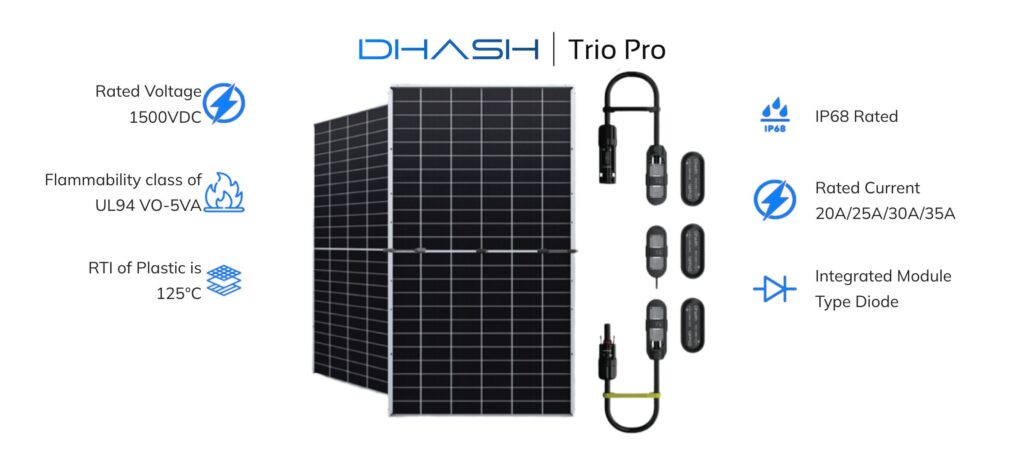
As the solar industry continues its rapid evolution, the focus has expanded beyond module wattage to include efficiency optimisation, reliability, and lifecycle performance. While advancements in cell technology often dominate discussions, the contribution of balance-of-module components—particularly PV junction boxes—remains critically significant.
Industry Outlook: Scaling Efficiency in a Rapidly Growing Solar Market
The global solar industry is witnessing unprecedented growth, driven by ambitious decarbonisation goals, policy support, and increasing demand for clean energy. In markets such as India, large-scale solar deployments and the push for domestic manufacturing are accelerating the need for high-efficiency, reliable components. As module technologies advance towards higher power outputs and more compact designs, even marginal efficiency gains at the component level are becoming increasingly valuable. This shift is placing greater emphasis on precision-engineered junction boxes and integrated solutions, which play a crucial role in optimising performance, reducing losses, and ensuring long-term system reliability.
A PV junction box serves as the electrical interface between the solar module and the external circuit. Its design and performance directly influence how efficiently generated power is transferred, making it a key determinant of overall system output.
Minimising Electrical Losses
Efficiency in solar modules is not solely defined by cell performance. Losses occurring at interconnection points can cumulatively impact energy yield. Modern junction boxes are engineered with low-resistance conductive pathways and optimised internal configurations, ensuring minimal power dissipation and maximum energy transfer.
Thermal Stability and Operational Reliability
Solar installations are exposed to varying and often extreme environmental conditions. Junction boxes must maintain performance integrity under high thermal stress. Advanced designs focus on effective heat dissipation and material stability, preventing degradation and ensuring consistent output over extended operational periods.
Integrated Safety Mechanisms
The inclusion of bypass diodes within junction boxes plays a crucial role in mitigating the effects of partial shading and cell mismatch. By allowing current to bypass underperforming cells, these mechanisms prevent hotspot formation, thereby protecting module integrity and enhancing long-term reliability.
Durability Across Diverse Environments
From arid deserts to humid coastal regions, solar modules operate in demanding conditions. High-quality junction boxes are built with robust enclosures, superior sealing, and high ingress protection ratings, ensuring resistance to dust, moisture, and UV exposure.
Supporting High-Efficiency Module Architectures
With the industry moving towards higher voltage systems and advanced cell technologies, junction boxes are evolving to accommodate increased current loads and enhanced insulation requirements. Their role is no longer passive but integral to enabling next-generation module performance.